


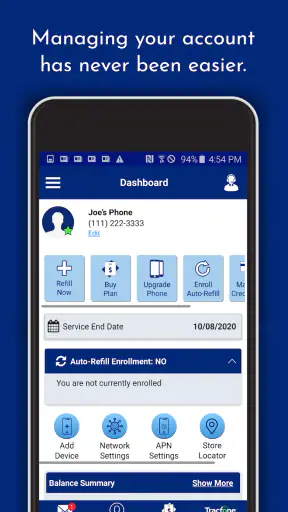
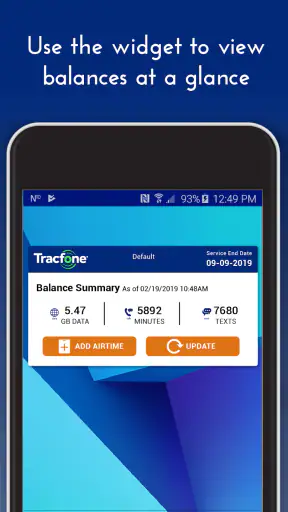
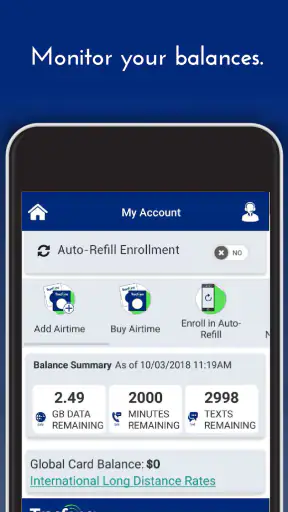
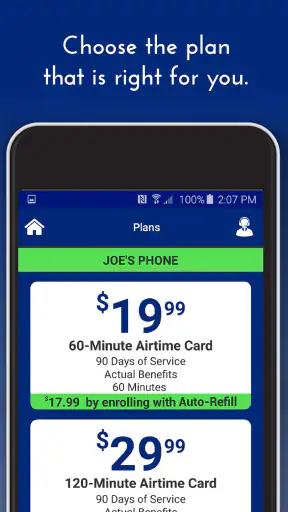
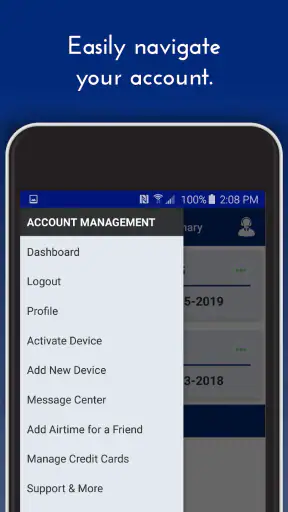
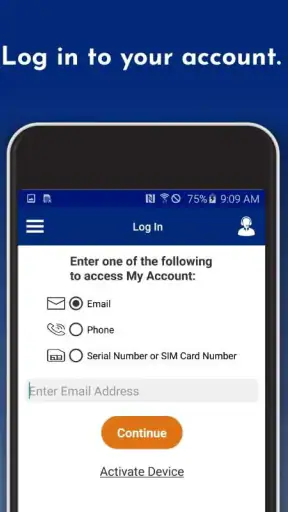
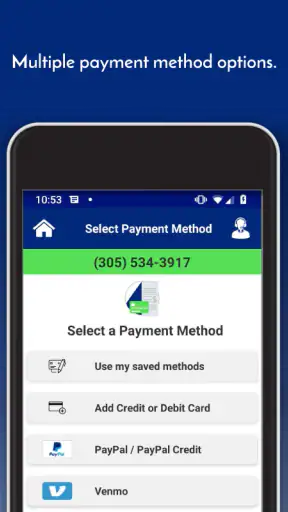
I found My Tracfone: Account Manager most useful when I treated it as a practical account companion rather than a complete replacement for every phone-service task. It is a free communication app from TracFone Wireless, Inc., designed to keep Tracfone account information close at hand on a mobile device. In a shared household, that simple purpose can make a real difference: one person may handle the account, another may carry the phone, and everyone benefits when the plan details are easier to check.
My experience with it is best described as functional rather than exciting. The app does not try to become a general messaging platform or a broad family-management tool. Instead, it sits beside the phone service and helps the account holder interact with it. That distinction matters, especially if you are deciding whether it belongs on your own phone, a relative’s device, or a shared household handset.
How My Tracfone fits into a shared household
A realistic example is a household with several Tracfone lines where one adult usually keeps track of service while other people use the devices. The person responsible for the account can use the app as a convenient place to review account-related information without relying on someone else to read details from a different phone. Meanwhile, the everyday user can still keep the handset available for calls, texts, and mobile data.
That arrangement works best when everyone understands whose account is being managed. My Tracfone is not automatically a neutral family dashboard. It is tied to account access, so the person signed in should be the person who is comfortable seeing and managing the relevant service information. I would not install it casually on a child’s phone simply because that phone uses Tracfone. The account holder and the device user may be different people, and that boundary should be agreed on first.
The app’s value becomes clearer when a household has a predictable routine. For instance, before leaving for a day trip, I would use it to check the service situation on the line that matters, then make sure the phone owner knows whom to contact if something needs attention. This avoids the common problem of discovering a service issue only after the person carrying the phone is already away from home.
It is also useful for shared devices, but only with a little discipline. If a tablet or spare phone moves between family members, leaving an account-management app signed in can expose information to the next user. I would sign out or otherwise protect access whenever the device is passed around. The app can support coordination, but it does not remove the need for sensible account privacy.
What I would decide before installing it
My first question would be simple: who actually needs to manage the Tracfone account? If the answer is one adult, installing the app on that person’s phone is usually the cleanest arrangement. If several people need access, I would agree on a primary account holder and avoid creating confusion by signing in everywhere.
I would also separate two jobs that are easy to mix up. The phone user needs reliable communication, while the account manager needs visibility and control over service details. My Tracfone is aimed at the second job. It should not be judged as though it were a replacement for the phone’s normal calling, texting, contacts, or messaging tools.
This is one of the less obvious trade-offs: putting the app on the user’s phone may make information immediately available, but it can also blur who is responsible for the account. Putting it only on the manager’s phone creates a clearer boundary, yet the manager may not be physically near the device when help is needed. I prefer the second approach for children and shared phones, and the first only when the user is also the trusted account holder.
Keeping setup within sensible boundaries
During setup, I would use the account credentials carefully and confirm that the correct Tracfone line or account is being handled before making any changes. A household with multiple phones can easily create confusion if someone assumes that the device in hand is automatically the service account they intended to view.
I would also avoid treating the app as a place to experiment. Account-management screens deserve the same attention as banking or utility apps, even though the consequences are different. Read each screen before confirming an action, especially when several lines or users are involved. A few seconds of checking can prevent an unnecessary conversation about why the wrong phone’s service was reviewed or changed.
Another practical tip is to keep the app on the account manager’s regular phone rather than on a device that is frequently reset, shared, or handed to guests. That makes the workflow more consistent. If the app is moved between devices, I would make a note of who is signed in and remove access from an old device when it is no longer trusted.
The app is free, and its content rating is Everyone, which makes it broadly suitable from an age-classification perspective. That does not mean every child should manage it independently. An age label describes the app’s general suitability; it does not replace a parent’s decision about account credentials, purchases, service changes, or private information.
Using it for coordination instead of constant supervision
In a household, coordination is where this app can earn its place. I would use it to establish a routine: the account holder checks the relevant service information, tells the phone user what they need to know, and leaves the device user free to use the phone normally. That is more efficient than repeatedly asking a child or older relative to navigate account screens they may not understand.
For an older family member, the benefit can be even more practical. If they use a Tracfone phone but do not enjoy handling account details, a trusted relative can manage the service side while the older user focuses on calls and messages. The arrangement should be transparent, though. I would explain what the app is for and make sure the device owner knows who has account access.
For teenagers, I would use the app as part of a conversation about responsibility, not as an implied monitoring tool. It can help the family agree on who checks service information and when, but I would not assume that it provides parental controls, location supervision, or detailed activity reports. Those are separate needs and should be handled with tools specifically designed for them.
The same principle applies to roommates or friends sharing responsibility for a phone. The app may help one person manage the Tracfone side, but it does not automatically create a shared governance system. Decide who is authorized, keep credentials private, and use ordinary communication for anything that affects another person’s access to the device.
Account access, trust, and age context
Because this is an account-focused communication app, trust matters more than the simple installation process. I would not share login details through casual messages or leave them written beside a shared phone. If another adult needs to help, I would decide whether that person truly needs direct access or whether the account holder can handle the task while they are present.
The Everyone rating is reassuring for households choosing an app for a general audience, but it should not be mistaken for a statement that the app is independently appropriate for every age or responsibility level. A young child may be able to open it, yet still be too young to understand account boundaries. A teenager may be capable of using it, while the parent may reasonably prefer to retain management access.
I also think the app should be judged by the account relationship, not just by the phone itself. A personal phone with a personal Tracfone account is straightforward. A family phone, donated phone, or device passed between relatives requires more care. Before installing, I would ask whether the current user should see account details and whether the device will remain trusted after it changes hands.
That is where My Tracfone differs from ordinary communication apps. A messaging app is usually centered on conversations between people. This one is centered on the service relationship behind the phone. The practical risk is not that it replaces your chats; it is that users may forget they are handling account information and treat access casually.
Where it stands beside usual alternatives
The most obvious alternative is using Tracfone’s normal account channels through a browser or customer-support route. A browser can be preferable when I am on a computer, comparing information across several tabs, or helping someone with a larger screen. My Tracfone is more convenient when I am already holding my phone and want a mobile-first way to handle the account.
Another alternative is doing everything through the phone’s built-in settings. Those settings can show device and network information, but they are not the same as managing a Tracfone account. They may help diagnose a local phone issue, while the account app is intended for the service relationship. I would use both, rather than expecting one to replace the other.
Customer support is still the better choice when the problem is complicated, unclear, or tied to an account situation that needs personal assistance. An app can make routine account work more convenient, but it cannot guarantee that every unusual case will be resolved without human help. If I were dealing with a disputed change, an unexpected service problem, or confusion across multiple lines, I would not keep tapping blindly; I would move to the appropriate support channel.
This comparison also explains the app’s modest average rating of 3.1 from around 57 thousand ratings. That figure suggests a mixed experience rather than a universal failure or a flawless tool. Account apps are often judged harshly when a user’s underlying service problem is urgent, so I read the rating as a reason to keep expectations realistic. Its usefulness depends heavily on whether the account information is current and whether the task is routine.
What the current app details mean in practice
My Tracfone has been available since October 17, 2013, and its current version is R27.7.0. It supports Android 7.0 and later, so people using older phones should check compatibility before planning around it. That requirement is not especially demanding for many devices, but it can matter with an old spare phone or a handset kept for emergencies.
The app has passed five million installs, which tells me it is not an obscure experiment. Still, popularity alone does not tell me whether it suits a particular household. I would choose it because the phone service is Tracfone and the account manager wants a mobile account tool, not because a large install figure guarantees a smooth experience on every device.
Its free price also needs a careful interpretation. The app itself does not require a purchase to install, but that does not turn the underlying phone service into a free service. I would keep the app’s cost separate from the plan and account decisions that happen around it. This distinction is especially important when a teenager or guest uses a shared device and assumes that a free app means no account consequences.
One useful habit is to update the app through the normal app-store process and then recheck the sign-in and account context before relying on it. I would not assume that an update changes the account relationship, but I would still confirm that I am looking at the intended line or account after any major maintenance. That small check is worthwhile in a multi-device home.
Who should use it, and who should skip it
I would recommend My Tracfone to a Tracfone customer who wants account access from a phone and prefers keeping service management close to the device. It makes the most sense for the primary account holder, a trusted adult coordinating several household phones, or someone helping a relative who does not want to handle account tasks alone.
I would be more cautious about installing it on a child’s personal phone when the child is not the account manager. The app may be age-rated for Everyone, but the account access question remains. In that situation, I would keep management with the parent or guardian and use ordinary conversations to coordinate service needs.
I would also skip it if I rarely need mobile account access and already prefer using a computer or customer support. Installing an app that will sit unused adds clutter without solving a real problem. Likewise, people looking for parental controls, location sharing, detailed usage supervision, or a full family communication hub should look elsewhere; those expectations go beyond what I would ask this account-management tool to do.
For someone who changes carriers frequently, the app is naturally less useful because its purpose is tied to Tracfone service. For a committed Tracfone household, however, that narrow focus is also its advantage. It does not need to be a universal telecom dashboard to be worthwhile; it only needs to make the relevant account tasks easier.
My household verdict
After using it with a household mindset, I see My Tracfone as a practical utility with clear limits. Its strongest role is giving a trusted account holder a mobile place to handle Tracfone-related information while keeping everyday phone use separate. That makes it helpful for shared devices, relatives who need assistance, and homes where one person coordinates several lines.
The key is to establish boundaries before installation: decide who owns the account, who may sign in, which device should remain trusted, and what the app is not intended to supervise. Those decisions matter more than simply downloading it. When the boundaries are clear, the app can reduce small points of friction and make household coordination less dependent on memory or guesswork.
My final recommendation is therefore selective. If you manage a Tracfone account and want a convenient phone-based companion, I think it is worth trying. If you need a family-control system, a messaging service, or a solution for a complicated support case, I would choose a different tool or channel. Its real strength is focused account coordination, not broad household control.
For the right user, that focus is enough. I would keep it on the account manager’s trusted device, avoid sharing credentials casually, and involve other household members through clear communication rather than assuming the app handles family roles automatically. Used that way, My Tracfone is a sensible free addition for Tracfone customers who want service management to be available wherever they carry their phone.


